
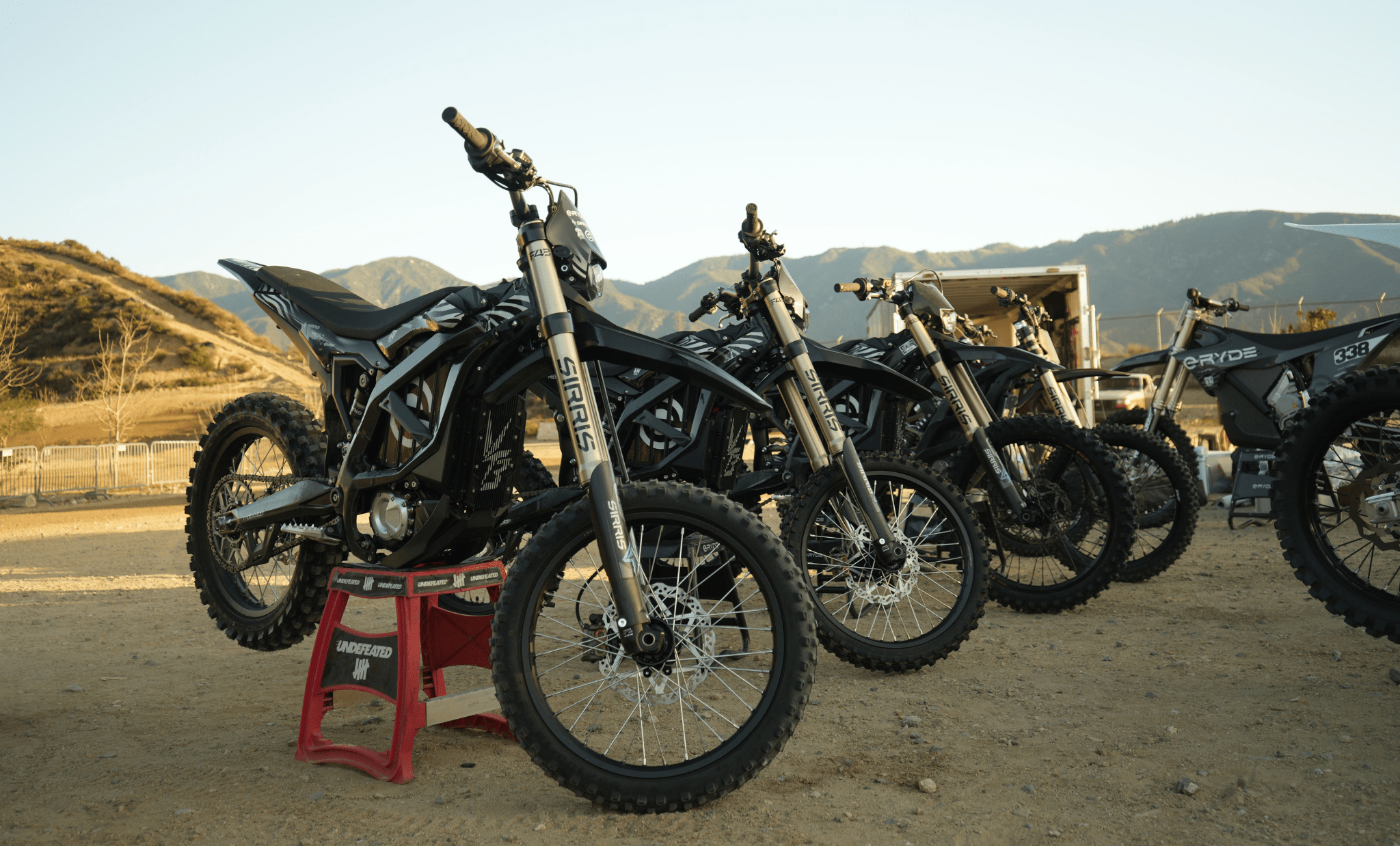
If you’ve been comparing an electric trail bike and an electric dirt bike, you’ve probably seen the term electric enduro bike show up as the “best of both.” That’s often true, but it’s only true when the bike is built and set up for enduro-style riding.
An electric enduro bike is designed for real-world off-road riding that mixes technical trails, climbs, fast flow sections, and higher-impact moments. It needs to be controllable at low speed, stable at higher speed, and durable enough to handle repeated hits without feeling harsh or unpredictable. It also needs consistent performance across a full ride, not just a strong first 10 minutes.
This guide explains what an electric enduro bike actually is, how it differs from other off-road categories, and the key features riders should look for before buying.
What “enduro” really means in electric riding
Enduro isn’t one terrain. It’s a mix. That’s why enduro bikes live between trail bikes and motocross bikes.
A true enduro setup needs to handle:
-
tight singletrack and slow-speed precision
-
steep climbs and loose traction
-
mid-speed flow trails and fire roads
-
occasional bigger hits, drops, or rough braking bumps
-
long ride times where fatigue, heat, and battery use matter
When riders call something an electric enduro bike, they’re usually describing a bike that can do technical trail work without fighting the rider, but still has enough chassis support and power control to push faster when the trail opens up.
Electric enduro bike vs electric trail bike vs electric dirt bike
Electric enduro bike vs electric trail bike
Trail bikes prioritize comfort and traction in slower technical terrain. An enduro bike borrows that low-speed control, but adds more stability and suspension support when speeds rise and impacts get bigger.
If a bike feels amazing in tight trees but gets nervous, bottoms out, or feels vague when pushed faster, it’s probably more trail-focused than enduro-focused.
Electric enduro bike vs motocross-style electric dirt bike
Motocross-style setups are designed for hard hits, jumps, and repeated high-impact landings. They usually feel firmer, more aggressive, and more demanding in slower technical sections.
An enduro bike needs some of that toughness, but it can’t punish the rider for two hours. The balance is supportive without being harsh, responsive without being twitchy.
The key features riders should look for
This is the part that matters. A label on a product page doesn’t make it enduro-ready. These features do.
1) Smooth, controllable power delivery
Enduro riding demands traction. The ability to control torque at low speed is a core enduro requirement.
Look for:
-
predictable throttle response at low speed
-
power that builds smoothly instead of hitting abruptly
-
adjustable ride modes that actually feel different and useful
-
tuning options that let the bike match different terrain
A bike can be powerful and still be enduro-friendly if the delivery is controlled. For most riders, controllability is what turns horsepower into real speed.
2) Strong midrange pull, not just peak output
Enduro speed comes from carrying pace, not only from peak numbers. A strong midrange makes the bike feel fast in real riding because it helps:
-
climb without needing a run-up
-
accelerate out of corners without breaking traction
-
maintain pace through changing trail surfaces
Peak output can be important, but enduro success is usually about usable power across a wide range.
3) A chassis that feels balanced and easy to place
Enduro terrain forces constant adjustments. You’re moving the bike around, not just pointing it forward.
Priorities include:
-
a predictable front end that holds a line
-
a rear end that stays planted under power
-
stable geometry that doesn’t feel nervous at speed
-
a center of mass that feels manageable in technical terrain
Weight matters, but balance matters even more. Two bikes with similar listed weight can feel completely different on real trails.
4) Suspension that blends comfort with support
Enduro suspension must do two jobs at once:
-
stay plush enough for roots, rocks, and chatter
-
stay supportive enough for faster hits, braking bumps, and occasional drops
Riders should look for:
-
adjustability that’s meaningful (softer for tight woods, firmer for faster terrain)
-
enough progression to avoid constant bottoming
-
stability under braking and acceleration
A quick test: if it feels great at slow speed but collapses under braking or bottoms often, it needs more support. If it feels planted at speed but beats you up in technical sections, it needs more compliance.
5) Heat management and consistent performance
Enduro rides are longer. That means heat builds in the motor, controller, and battery. A strong enduro platform stays consistent, instead of feeling great early and fading later.
When comparing bikes, riders should ask:
-
does performance stay consistent through the ride?
-
does the bike feel different after repeated climbs?
-
is there a noticeable drop when the battery gets lower?
Consistency is one of the most underrated “features” of a real enduro setup.
6) Range and ride time that match real trail days
Range is not one number. It depends on terrain, pace, tire setup, and rider input.
For enduro use, the right question is: will it support the typical ride length without anxiety?
Look for:
-
a battery system that supports your usual loop length
-
predictable range changes across different terrain
-
a platform that encourages efficient riding through smooth delivery
A bike that is easy to control often ends up being a bike that goes farther.
7) Durability: protection, components, and serviceability
Enduro riding finds weak points fast. It’s not just about strength, it’s about what happens when something gets hit, packed with mud, or needs servicing.
Riders should pay attention to:
-
component quality and protection points
-
how exposed the important parts are
-
how easy routine checks and repairs are
-
parts availability and support
If you ride remote trails, this is not optional. It’s peace of mind.
8) Braking and control feel
In enduro, braking control is a speed feature. A bike that brakes predictably lets you ride faster and safer.
Look for:
-
consistent lever feel
-
stable chassis under braking
-
suspension behavior that doesn’t dive excessively
Control is what makes pace sustainable.
A practical “is this really an enduro bike?” checklist
Here’s a quick way to judge whether a bike is truly enduro-ready:
-
Can the bike crawl smoothly at low speed without fighting throttle response?
-
Does it maintain traction on loose climbs without constant wheelspin?
-
Can the suspension handle small chatter and bigger hits in the same ride?
-
Does it stay stable when speeds rise, or feel twitchy?
-
Does performance stay consistent as the ride goes on?
-
Is the range predictable enough to plan a normal ride loop?
-
Are parts, support, and service access realistic for how you ride?
If most answers are “yes,” you’re looking at a real enduro-capable setup.
Where the Ventus platform fits for enduro-minded riders
Enduro riders usually want a platform that can be tuned and set up for the exact terrain they ride. That means looking at the whole system, not one spec.
To explore the core platform:
-
Start with Ventus One Plus
-
Review available component paths in controllers and motors
-
Browse additional options and parts in all products
-
Get a full view at Ventus Bikes USA
If you want help matching an enduro-style setup to your terrain and pace, contact Ventus Bikes USA. That conversation is usually the fastest way to avoid buying the right bike with the wrong setup.
Choosing the right enduro setup for your riding
An electric enduro bike should feel confident in technical terrain, composed when speeds rise, and consistent through a full ride. That blend is the entire point.
When you compare options, focus on:
-
controllable power delivery
-
suspension balance between comfort and support
-
stability and handling in mixed terrain
-
consistent performance and realistic range
-
durability, parts support, and serviceability
That’s what separates a true enduro-ready platform from something that only looks good on paper.
To explore an enduro-minded performance platform and available components, start with Ventus One Plus. If you have questions about fit, setup, or tuning direction, contact Ventus Bikes USA.
FAQ
What is an electric enduro bike?
An electric enduro bike is an off-road electric bike designed for mixed terrain, combining low-speed technical control with stability and support for faster sections and bigger impacts.
Is an electric enduro bike the same as an electric trail bike?
Not exactly. Trail bikes usually prioritize comfort and traction in slower technical terrain. Enduro bikes aim to keep that control while adding stability and suspension support for higher speeds and bigger hits.
Is an electric enduro bike good for beginners?
It can be, especially if power delivery is smooth and adjustable. A predictable bike with controllable torque often builds confidence faster than a sharp, aggressive setup.
What features matter most for enduro riding?
Most riders should prioritize smooth power delivery, balanced handling, suspension that blends comfort and support, consistent performance over time, and durability for real trail conditions.
Can one bike work for enduro and trail riding?
Yes. Many enduro-focused setups can be softened for trail days, and many trail platforms can be strengthened for enduro use. The key is whether the platform is adjustable enough to match both.
Share:
Fastest Electric Dirt Bike in 2026: What Actually Determines Speed?
Electric Dirt Bike Top Speed: Real-World Factors That Change the Number