
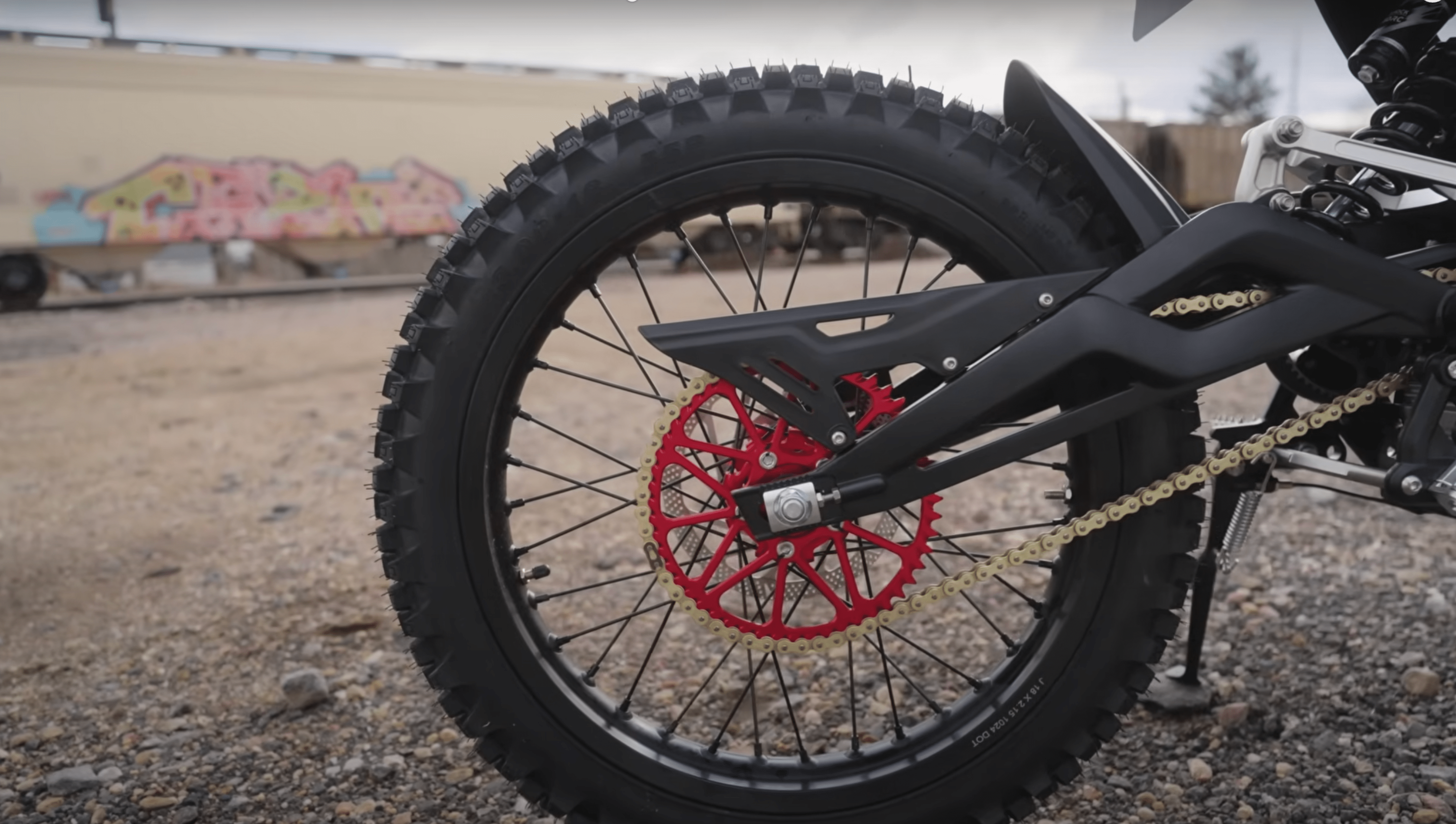
Every electric dirt bike top speed claim starts on a spec sheet. 60 mph. 75 mph. 80 mph. The numbers look great in product listings, and they are accurate under the right conditions. But conditions on the trail or track rarely match the lab, and that gap between advertised speed and real-world speed is where most riders get confused. If you have been shopping for an electric dirt bike and wondering whether the posted top speed actually holds up, here is what actually moves the needle.
What Determines Electric Dirt Bike Top Speed?
Motor Power Output (kW Rating)
The motor is the starting point. Kilowatt (kW) ratings tell you how much energy the motor can convert into motion at peak output. A 20 kW motor and a 28 kW motor might both be marketed as high-performance, but that 8 kW difference shows up fast when you roll the throttle open on a straightaway. Higher peak kW generally means a higher ceiling for top speed, but only if the rest of the drivetrain can keep up. The electric dirt bike motors in the Ventus lineup, for example, deliver up to 28 kW peak and 456 N.M of torque at the wheel. That is the kind of output that translates to real speed on real terrain.
Battery Voltage and State of Charge
Voltage is the pressure pushing current through your motor. A fully charged 72V battery delivers more voltage than one sitting at 60% charge, and that difference affects acceleration and top-end speed. Think of it like fuel pressure in a gas engine. As the battery drains, voltage sags, and the motor cannot spin as fast. Samsung 21700 cells, the type used in high-performance batteries like the Ventus 72V 50Ah pack, hold voltage more consistently through the discharge cycle than cheaper cell chemistries. That means your speed stays more stable from full charge to 30% than it would on a budget pack.
Controller Programming and Ride Modes
The controller sits between the battery and the motor. It regulates how much power gets delivered and how quickly. Most electric dirt bikes ship with preset ride modes (Eco, Standard, Sport), and each mode caps your available power at a different level. But some controllers go further. The tunable controllers in the Ventus Aetos line let riders adjust throttle response, power curves, and top-speed limits through a mobile app. That means two riders on the same bike can have completely different speed profiles depending on how they have their maps configured.
Rider Weight and Riding Position
A 150-pound rider and a 220-pound rider on the same bike will see different top speeds. Physics does not care about marketing. Heavier riders need more energy to accelerate, and the motor hits its power ceiling sooner. Riding position matters too. Standing tall catches more wind. Tucking low reduces drag. On pavement, aerodynamics matter more than most people think. On dirt, the difference is smaller because speeds are generally lower, but it still plays a role on long, open sections.
Terrain and Conditions That Affect Speed
Hard-Pack vs. Loose Dirt vs. Sand
Surface type changes everything. Hard-packed dirt is the closest thing to pavement you will find off-road, and it is where you will see speeds closest to the spec sheet number. Loose dirt absorbs energy through tire slip. Sand is even worse. The rear tire digs in, the motor works harder, and your top speed drops significantly. A bike rated at 80 mph on hard-pack might struggle to hit 55 in deep sand.
Elevation and Temperature
Electric motors do not lose power at altitude the way gas engines do (no air intake to choke), but batteries perform differently in extreme temperatures. Cold weather reduces battery output temporarily, which can lower your top speed by a few mph. Heat affects the controller and motor too. Sustained high-speed runs generate heat, and most controllers will throttle power back to protect components once temperatures climb. According to the U.S. Department of Energy, lithium-ion batteries can lose 10-20% of their effective capacity in sub-freezing conditions.
Advertised Speed vs. Trail Speed
Here is the honest version: the advertised top speed is measured under ideal conditions. Flat surface, lightweight rider, full battery, sport mode. Real trail riding rarely looks like that. Turns, elevation changes, rocks, roots, and varying terrain mean your average speed on a trail ride is going to be well below max. And that is fine. Top speed is one data point, not the whole picture. Torque delivery, throttle control, and how the bike handles at 25 mph through a rocky section matter more on most rides than what it does wide-open on a fire road. Real rider reviews tend to back this up. Riders who love their bikes talk about control and feel as much as raw speed.
How Tunable Controllers Close the Gap
One of the advantages of electric over gas is software-level tuning. A gas bike is mechanically limited. You can change gearing, jetting, or exhaust, but each change is physical and takes time. With a tunable controller, you adjust power delivery from your phone. Want smoother roll-on for a technical trail? Dial back the throttle response curve. Heading to a wide-open desert section? Open everything up. This kind of adjustability means the gap between advertised top speed and usable speed gets smaller, because you can set the bike up for exactly how you plan to ride that day.
What 80 MPH Actually Feels Like on Dirt
If you have only ridden gas dirt bikes, the first time you hit top speed on an electric is going to feel strange. There is no engine noise telling you how fast you are going. No vibration through the frame. Just wind and the sound of your tires on dirt. 80 mph on a dirt bike, electric or gas, is legitimately fast. The difference is that electric torque delivery is instant and linear. There is no powerband to ride, no rev matching. You roll the throttle and the bike goes. That directness can actually make the speed feel more controlled, because there are no surprises in the power delivery.
Frequently Asked Questions
How fast do electric dirt bikes go?
Most performance-oriented electric dirt bikes top out between 50 and 80 mph depending on motor size, battery voltage, and controller settings. Entry-level models aimed at beginners typically cap around 30-45 mph.
Does battery charge level affect top speed?
Yes. As the battery discharges, voltage drops and the motor receives less power. A fully charged battery delivers the highest top speed. Most riders notice the difference below 30-40% charge.
Can you increase the top speed of an electric dirt bike?
On bikes with tunable controllers, yes. Adjusting power maps, removing speed limiters (where legal), and upgrading to a higher-output motor or battery can all raise top speed. On locked-down consumer models, options are more limited.
Are electric dirt bikes faster than gas?
At the top end, high-performance gas bikes still hold the edge in outright top speed. But electric bikes accelerate faster off the line thanks to instant torque. For most off-road riding, acceleration and low-speed control matter more than top speed.
What is the fastest electric dirt bike available?
As of 2026, several production electric dirt bikes hit 75-85 mph. The Ventus V1+ reaches 80 mph peak with its 28 kW motor and 72V battery system.
Ready to Feel the Difference?
Numbers on a page only go so far. If you want to know what electric dirt bike top speed actually feels like, the best next step is to get in touch. Reach out to our team for questions about specs, availability, or to talk through which setup fits your riding style.
Share:
What Is an Electric Enduro Bike? Key Features Riders Should Look For
Electric Enduro Bike vs Electric Motocross Bike: Which One Fits Your Riding?